
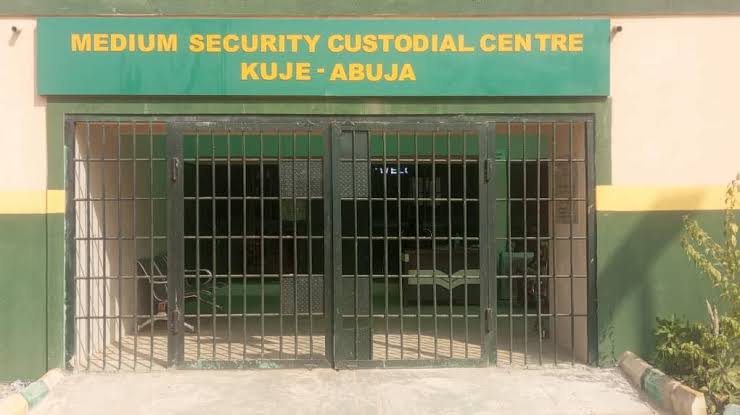
By any standard, a prison is designed to be a place of incapacitation, deterrence, and rehabilitation. But in Nigeria, the correctional facility has increasingly become a theater of the absurd—a place where justice is commodified, and the length of a sentence is often determined by the depth of one’s pockets.
To understand the systemic rot eating at Nigeria’s criminal justice system, one need not look at abstract statistics alone. A microscopic examination of the Kuje Medium Security Custodial Centre—popularly known as Kuje Prison—offers a stark, unsettling window into how corruption thrives behind bars, subverting the very essence of justice.
The Microcosm of Kuje
Located in the Federal Capital Territory, just a stone’s throw from the seat of power, Kuje Prison is meant to be a flagship facility. Yet, it has historically embodied the paradoxes of the Nigerian state.
The most glaring revelation of its compromised state occurred in July 2022, when heavily armed terrorists breached its perimeter, freeing hundreds of inmates, including high-profile Boko Haram commanders. While the government blamed the attack on external aggression, security analysts and internal whistleblowers pointed to a more insidious enemy: internal complicity. The walls of Kuje did not fall merely to explosives; they crumbled under the weight of years of corrupt procurement, compromised staffing, and a culture of systemic negligence.
But the terrorism of the gun is only part of the story. The quiet, everyday terrorism of corruption is what truly defines the Kuje experience for the average inmate.
The Pipeline of Injustice
Corruption in Kuje does not begin at the prison gates; it is the end product of a polluted pipeline.
The criminal justice chain in Nigeria—comprising the police, the judiciary, and the prison service—operates as a symbiotic ecosystem of extortion. A suspect is arrested by the police and detained unless a “bail fee” (an illegal but ubiquitous practice) is paid. If the case goes to court, it is often stalled by prosecutors and defense lawyers who benefit from the continuous adjournment merry-go-round.
By the time the accused arrives at Kuje, they are already financially drained and psychologically broken. For the majority—over 70% of Kuje’s inmates are Awaiting Trial Persons (ATPs)—the prison becomes a purgatory where their release is auctioned to the highest bidder.
The Economy of Cells: VIP vs. the Pit
Inside Kuje, a dual economy exists. On one hand, there are the standard, suffocatingly overcrowded cells designed for perhaps 50 inmates but housing over 200. Here, ventilation is a luxury, and sleeping is done in shifts on bare floors.
On the other hand, there is the “VIP” or “VIP-protected” wing. Corruption has birthed a class system within the facility. Inmates accused of financial crimes, high-profile fraudsters, and politically connected individuals can “purchase” relative comfort. For the right price paid to warders and facility administrators, an inmate can secure a relatively spacious cell, a mattress, unrestricted access to mobile phones, catered food from outside, and even air conditioning.
In Kuje, poverty is punished with inhumane degradation, while wealth buys a sanitized version of incarceration.
The Extortion Racket
For the average inmate without deep pockets, surviving in Kuje requires navigating a relentless extortion racket.
- The “Bail-Out” Scam: Many inmates languishing in Kuje have technically been granted bail by the courts but cannot meet the stringent bail conditions, or their case files have been “lost” by the prison records department. Warders often act as middlemen, promising to “trace” files or facilitate administrative releases for fees ranging from tens to hundreds of thousands of naira.
- Access to Basics: Items that should be rights—access to medical care, the use of the telephone to call family, or even a change of clothes—are heavily monetized. Warders run internal cartels controlling the sale of food, water, and personal hygiene items at exorbitant prices.
- The Visitation Gate: Families of inmates are routinely exploited. Before they can see their loved ones, they are often coerced into paying illegal “gate fees” or bribing the guards to ensure they are allowed to drop off food and provisions.
The Diversion of Funds
The corruption at Kuje is also structural. The Federal Government appropriates funds daily for the feeding and welfare of every inmate. However, audits and investigative reports have consistently shown a massive gulf between what is allocated and what is delivered.
Contractors collude with prison officials to supply substandard food items, inflating the costs and splitting the profits. The inmates receive watery beans and spoiled rice, while the difference lines the pockets of the procurement chain. Consequently, malnutrition and disease outbreaks are common, leading to preventable deaths that are officially recorded as “natural causes.”
The Consequences: A Threat to National Security
When a society allows its criminal justice system to be hijacked by corruption, the consequences extend far beyond the prison walls.
Kuje Prison serves as a prime recruitment ground for criminal syndicates. Hardened criminals interact freely with first-time offenders, sharing networks and tactics. Worse still, the 2022 jailbreak demonstrated how a corrupt, compromised facility becomes a national security vulnerability. Terrorists who should have been isolated were instead able to communicate, plan, and ultimately escape, returning to the hinterland to unleash more havoc.
Furthermore, the subversion of justice breeds public cynicism. When citizens see that the wealthy and connected evade true punishment while the poor are crushed by the system, the social contract is broken. Vigilantism and mob justice become the unfortunate alternatives for communities that have lost faith in state institutions.
Dismantling the Cartel: The Way Forward
Fixing the rot in Kuje and, by extension, the Nigerian Correctional Service requires surgical, structural interventions:
- Digitization of Records: The era of manual, manipulable files must end. Case files, inmate records, and court orders must be digitized and accessible to the judiciary, reducing the power of warders to hold inmates hostage.
- Independent Oversight: The internal audit mechanisms of the Correctional Service are clearly compromised. Independent bodies, including civil society organizations and the National Human Rights Commission, must be granted unfettered, unscheduled access to facilities like Kuje.
- Decongestion Through Non-Custodial Sentencing: Over 70% of inmates in Kuje are awaiting trial. The judiciary must embrace non-custodial sentences for minor offenses and implement the Administration of Criminal Justice Act (ACJA) to fast-track trials.
- Whistleblower Protection: Warders and officials who want to expose corruption within the system currently do so at the risk of their lives. A robust, anonymous whistleblower framework with financial incentives is necessary to break the code of silence.
- Transparent Procurement: Feeding contracts should be subjected to public scrutiny. Funds should be tracked from the treasury to the inmate’s plate, utilizing technology and community-based monitoring committees.
Kuje Federal Prison is not just a building holding criminals; it is a mirror reflecting the failures of the Nigerian state. The corruption tracked within its walls—from the VIP cells to the extortion at the gates—is a direct result of a criminal justice system that prioritizes revenue generation over rehabilitation, and patronage over the rule of law.
Until the systemic corruption that turns justice into a commodity is dismantled, facilities like Kuje will continue to serve not as correctional centers, but as factories of injustice, churning out individuals more dangerous and disenfranchised than when they entered. True reform does not require building higher walls; it requires building a system where the law is applied equally, devoid of the grease of corruption.
Abel Anselm is an Investigative Journalist with Daily Intel Newspaper