
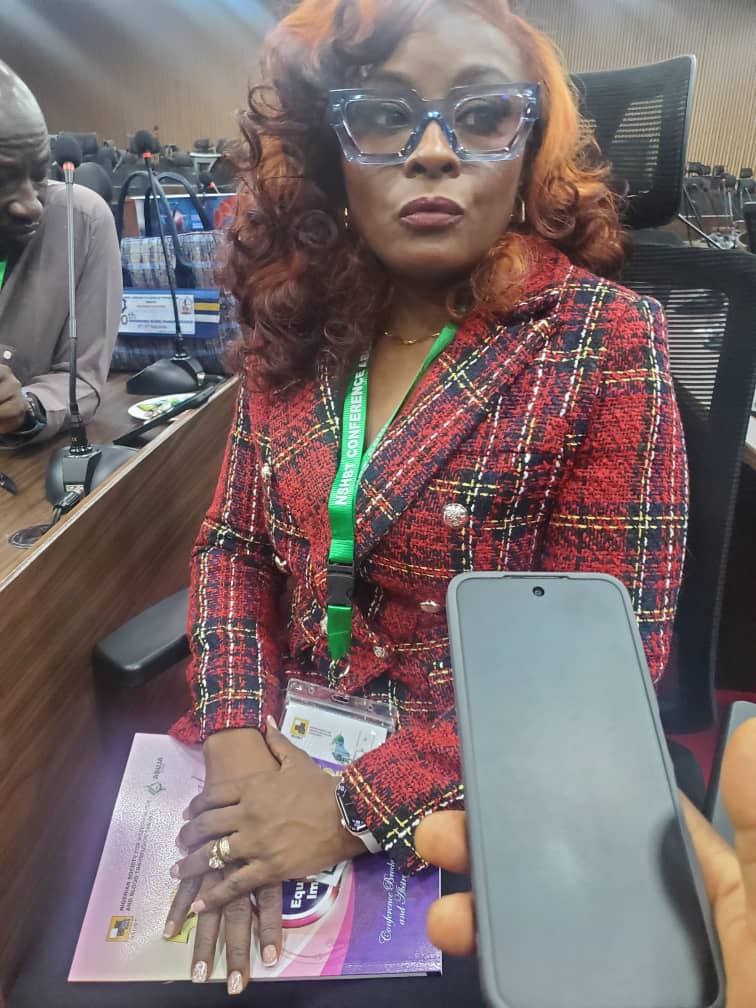
The President of the Nigerian Society for Haematology and Blood Transfusion (NSHBT), Prof. Kaladada I. Korubo, has called for stronger diagnostic systems, sustainable healthcare financing and strategic partnerships to expand access to modern haematological care in Nigeria.
Korubo made the call while welcoming delegates to the 50th Annual Scientific Conference and Annual General Meeting of the Society in Abuja, where she unveiled the theme, “Precision Haematology in Resource-Limited Settings: Bridging Innovation and Access in Nigeria.”
She described the 50th annual conference as a landmark occasion, representing five decades of scholarship, mentorship, advocacy and commitment to improving the care of people living with blood disorders in Nigeria.
According to her, the golden jubilee was not merely an opportunity to celebrate the Society’s achievements, but also a moment to reflect on its past, assess its present position and determine the future of haematology and blood transfusion services in the country.
“Haematology is being transformed by molecular diagnostics, genomics, artificial intelligence, targeted therapies, immunotherapy, transplantation, cellular therapies and advances in transfusion medicine,” Korubo said.
She, however, questioned the value of such innovations if patients in Nigeria are unable to access them.
“For many patients, access still begins with accurate diagnosis, safe blood, essential medicines, modern therapies and fair care regardless of geography or cost,” she said.
Korubo stressed that progress in healthcare should not be measured only by what medical science is capable of achieving, but by what patients can actually receive.
She urged stakeholders in the health sector to focus on bridging the gap between innovation and access within the realities of Nigeria’s healthcare system.
She said the Abuja 2026 conference was designed to lead that conversation, with sessions covering precision haematology, diagnostics, digital pathology, artificial intelligence, transfusion medicine, patient blood management, haemoglobinopathies, thrombosis, haemophilia, transplantation and cellular therapies.
Nigeria Can Deliver Precision Haematology
The NSHBT president expressed optimism that Nigeria could deliver precision haematology, but said achieving that goal would require stronger diagnostic capacity, improved transfusion services, locally generated evidence, sustainable financing, collaboration and strategic partnerships.
“Above all, we must translate science into systems, evidence into policy and innovation into access,” she said.
Korubo also challenged members of the Society to take greater ownership of the organisation and contribute actively to its development.
She said the NSHBT must become a more visible, inclusive, connected and impactful professional body, with greater emphasis on continuing education, relevant research, policy engagement, advocacy, partnerships and investment in the next generation of haematologists.
“For residents and early-career colleagues, the Nigerian Society of Haematologists must be more than an annual conference; it must be a professional home for mentorship, scholarship, collaboration, opportunity and leadership,” she said.
She added: “NSHBT belongs to all of us, and the Society we envision must be built together. I therefore challenge every member to move from membership to ownership: mentor, collaborate, generate evidence, serve, support advocacy and bring solutions.”
Society Pays Tribute to Professor Fola Esan
The conference also provided an opportunity for the Society to honour the memory of the late Professor Fola Esan, described by Korubo as the doyen of Nigerian haematology and the country’s first indigenous Professor of Haematology.
Korubo described Esan as a pioneer, teacher, mentor and institution-builder whose contributions helped lay the foundation upon which generations of Nigerian haematologists have built their careers.
“To many of us, he was simply ‘Baba’ — a revered senior colleague whose wisdom, scholarship and devotion to the profession inspired generations,” she said.
She called on delegates to observe a minute of silence in his honour and in remembrance of other departed senior colleagues and members who contributed to the development of haematology and blood transfusion in Nigeria.
Korubo said the late professor’s legacy should serve as a reminder that the current generation of professionals are custodians of a heritage built by those who came before them.
Looking Towards the Next Fifty Years
Reflecting on the Society’s next 50 years, the NSHBT president challenged members to build a stronger and more equitable healthcare system for patients with blood disorders.
She asked whether future generations would look back and recognise the present generation as the one that narrowed Nigeria’s diagnostic gap, strengthened the country’s blood transfusion system, expanded access to modern therapies and developed sustainable transplantation and cellular therapy capacity.
She also identified the generation’s responsibility to produce Nigerian research evidence capable of influencing national health policy and reducing inequalities in haematological care.
“That is the legacy we must now build. We have inherited a proud history, but history places an obligation upon those who inherit it. We have inherited a proud legacy; we now have a responsibility to build an even greater future,” she said.
Appreciation to Delegates and Partners
Welcoming delegates on behalf of the National Executive Council and the entire membership of the Society, Korubo expressed appreciation to the Local Organising Committee in Abuja for its efforts in hosting the milestone conference.
She also acknowledged past presidents and senior colleagues for their guidance, as well as speakers, session chairs, partners, sponsors, exhibitors and others whose contributions made the conference possible.
She expressed particular anticipation for the keynote address by Prof. Iheanyi Okpala, titled “Molecular Precision Improves the Understanding and Management of Blood Disease.”
Korubo urged delegates to use the 50th anniversary not only to celebrate the Society’s achievements but also to renew their commitment to building a more accessible, innovative and sustainable future for haematology and blood transfusion services in Nigeria.