
SUSTAINING INTERNATIONAL CONVENTIONS: Federal Government Applauds the Judiciary on Adherence to Air Passenger Rights
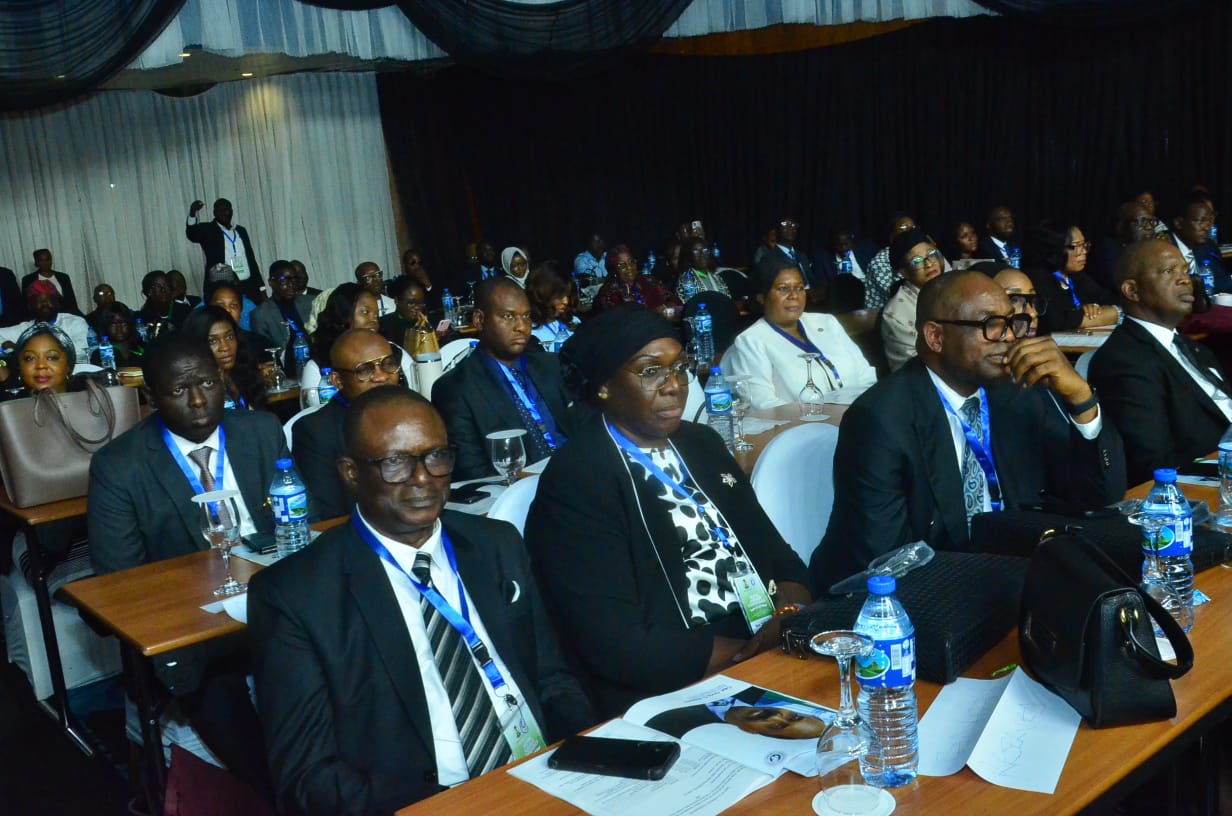
Judges from across Nigeria recently gathered at the Transcorp Hilton Hotel, Abuja, under the auspices of the Federal Ministry of Aviation and Aerospace Development, in collaboration with the Nigeria Civil Aviation Authority (NCAA) and organized by Streamsowers & Köhn, to deliberate on the strengthening and ratification of air passenger rights. The discussions also addressed the safety and handling of luggage and cargo in modern air transport.
The organizers unveiled the conference theme:
“The Role of Judges in Sustaining Nigeria’s Adherence to Applicable International Conventions in Relation to Carriage by Air.”
The event attracted top government officials and legal experts, including the Minister of Aviation and Aerospace Development, Festus Keyamo (SAN); the Attorney General of the Federation and Minister of Justice; NCAA Director-General Captain Chris O. Najomo; and other distinguished jurists and scholars.
Focus on International Conventions
A major part of the conference centered on the Montreal Convention of 1999, a landmark treaty that modernizes and unifies rules governing international air carriage. The discussions highlighted key provisions related to passenger compensation, airline liability, and consumer protection, emphasizing the global relevance of the treaty in today’s aviation ecosystem.
This review built on the earlier Warsaw Convention of 1929, which originally established international standards for air transportation. Participants noted that while the Warsaw Convention laid essential groundwork, contemporary realities—such as increased air travel volume, modern aircraft, and evolving passenger rights—necessitated more modern frameworks like the Montreal Convention.
The conference reaffirmed Article 1 of the Montreal Convention, which applies to:
Carriage of persons, baggage, and cargo for reward
Gratuitous carriage performed by an air transport undertaking
Journeys where the point of departure and destination are within the territories of two different State Parties—even if breaks or transshipments occur
Equipping the Judiciary for Global Aviation Standards
A central objective of the gathering was to deepen the judiciary’s understanding of international aviation law and its interaction with Nigeria’s domestic legal system. Presenters stressed that consistent and informed judicial interpretation is vital for:
Strengthening Nigeria’s compliance with international obligations
Enhancing consumer protection in air travel
Ensuring fairness in aviation-related disputes
Maintaining global confidence in Nigeria’s aviation system
Legal experts further explained that judges play a critical role in giving practical effect to conventions ratified by the country, ensuring that airlines, regulators, and service providers align with global best practices.
Keyamo: “Aviation is an International Venture”
In his keynote address, Minister Festus Keyamo underscored that aviation cannot operate in isolation, as its standards and operations naturally transcend national borders.
“Today’s gathering is a meeting of minds at the crossroads of law, policy, and international civil aviation—an intersection that defines how we protect lives, resolve disputes, and maintain confidence in our nation,” he said.
The Minister emphasized the need for closer collaboration between regulators and the judiciary to ensure consistent interpretations of international treaties. He noted that judicial decisions do more than resolve disputes—they signal Nigeria’s seriousness in honoring its global commitments.
Keyamo called for a unified approach between lawmakers, judges, and regulators, stressing that aviation disputes often require technical and specialized understanding of international norms, safety procedures, insurance structures, and operational standards.
NCAA: Upholding Nigeria’s International Obligations
Delivering his welcome address, the Director-General of the NCAA, Captain Chris Najomo, reaffirmed Nigeria’s commitment to global aviation treaties, particularly:
The Convention on International Civil Aviation (Chicago Convention, 1944)
The Montreal Convention (1999)
He noted that these foundational instruments guide Nigeria’s regulatory structure and operational standards.
“Conventions achieve their true force only when upheld in our courts. This is where the critical role of the judiciary comes in,” the DG stated.
Najomo reiterated that while the NCAA continues to enforce international standards and ensure robust oversight, the judiciary provides the legitimacy needed for regulatory decisions to take lasting effect.
Judiciary’s Role Acknowledged
Streamsowers & Köhn rounded off the conference by symbolically presenting a gavel to underscore the judiciary’s crucial role in:
Consolidating regulatory reforms
Ensuring compliance with international best practices
Strengthening the credibility of Nigeria’s aviation system
Participants agreed that continuous judicial education is essential for effective interpretation of treaties and conventions, particularly in a fast-evolving global aviation environment.
Conclusion
The conference served as a strategic platform for aligning Nigeria’s aviation sector with global legal standards. With strengthened collaboration between the judiciary, regulators, and policymakers, Nigeria aims to enhance passenger rights, improve regulatory consistency, and boost its reputation in international civil aviation.
As the aviation sector undergoes reforms and modernization, the judiciary’s role in interpreting and applying international aviation conventions remains indispensable to Nigeria’s progress and global competitiveness.